
Home › Treatments › CAM walker boots
CAM walker boots (moon boots)
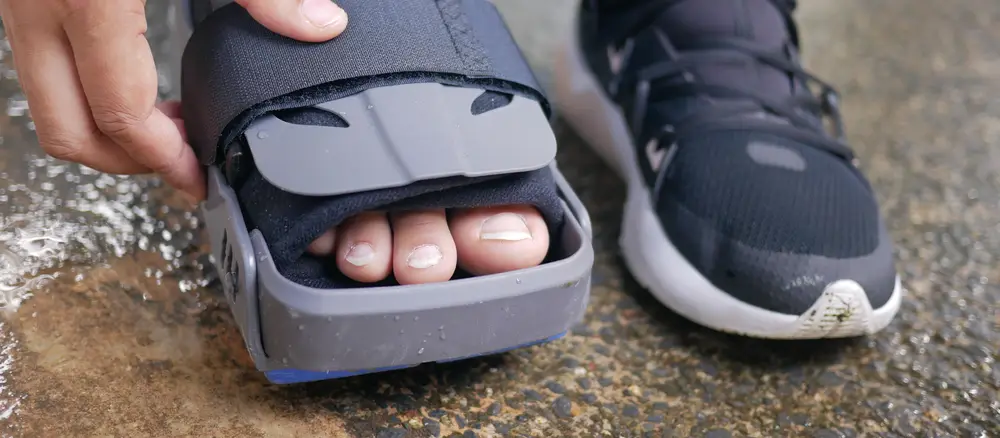
Been advised you may need a moon boot, or already wearing one? Here is what the boot does, how to wear it more comfortably and which warning signs need urgent care.
Book here, or go back to whoever prescribed the boot?
- A doctor, hospital or fracture clinic gave you the boot: follow their plan, and ask them how long to wear it and when to come out of it. Fit, comfort or rubbing problems can be checked here; bring their instructions.
- Not yet assessed, or unsure whether a boot suits your injury: book an assessment here. A possible broken bone needs medical assessment first.
What is a CAM walker boot (moon boot)?
A CAM (controlled ankle motion) walker boot is a removable walking boot that limits ankle movement and helps protect the foot or ankle while it settles. Many people call it a moon boot.
Most have a rigid frame, a padded liner, adjustable straps and a curved sole that lets you walk without bending the ankle much. Some have air cells for a closer fit, and taller or shorter versions suit different injuries.
When might a CAM walker boot be used?
A boot is one option that may be used after assessment, not instead of it. Examples include:
- some stable foot or ankle fractures, when a doctor or fracture clinic advises a boot
- some significant ankle injuries, when advised after assessment (see an ankle sprain that has not settled)
- some tendon or bone-stress injuries, to reduce load while they settle (see shin pain and sports and running injuries)
- offloading the foot after some procedures, as advised by your treating team
Possible broken bone? A boot is not a substitute for medical assessment. If you cannot bear weight, have marked swelling or deformity, or think a bone may be broken, see a GP, urgent care service or emergency department first, as imaging may be needed.
What happens when a boot is fitted?
Assessment, fitting and wearing the boot
- We check whether a boot suits your injury and any advice from your doctor or fracture clinic, and discuss other options.
- If a boot is suitable, we fit it and show you how to put it on, fasten the straps firmly but not too tightly, and take it off.
- Wear a long, smooth sock under the liner, and check your skin each day for redness, rubbing or blisters—especially if you have diabetes or reduced feeling in your feet.
- The boot’s thick sole can make one leg feel longer. A supportive shoe with a similar sole height on the other foot, or a shoe raise, may help your hips and back feel more even.
- If you cannot put weight through the leg, ask your doctor about your risk of blood clots.
- Whether you sleep or shower in the boot depends on the injury, so follow the advice you have been given.
- Do not drive with a boot on your right foot. If it is on your left foot, check with your doctor and your insurer before driving.
Getting back into shoes
Coming out of the boot is usually gradual. How long you wear it and how you return to normal shoes depend on the injury and your progress, so follow the plan from your podiatrist, doctor or fracture clinic. Rehabilitation exercises may be part of that return.
How much does a CAM walker boot cost?
CAM walker boots are quoted separately at consultation. Before you decide, ask whether fitting, adjustments and reviews are included. See separately quoted treatment.
Common questions about CAM walker boots (moon boots)
Can I take a moon boot off?
Can I drive with a moon boot?
How long will I need to wear a CAM walker boot?
Clinical information sources
These sources support the general information above. Individual assessment may lead to different advice.